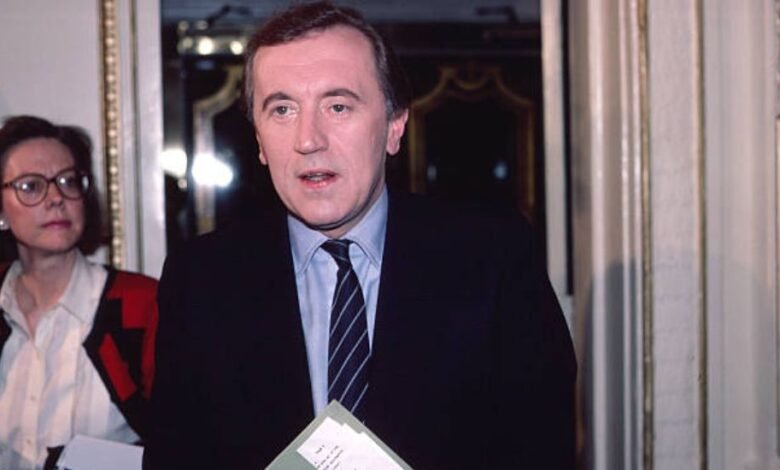
Sir David Frost was a British television presenter, journalist and interviewer whose career spanned more than five decades. From his early success in television satire to his famous 1977 interviews with former US President Richard Nixon, Frost became one of the most recognisable figures in British and American broadcasting. He interviewed world leaders, presented entertainment programmes and helped shape the development of breakfast television in the UK. His work combined political questioning with an instinct for television as a form of public conversation.
Quick Answer: Who Was David Frost?
Sir David Frost was a British television presenter, journalist and interviewer, born on 7 April 1939 in Tenterden, Kent. He became internationally famous for his 1977 interviews with former US President Richard Nixon. His television career also included That Was the Week That Was, The Frost Report and Breakfast with Frost. He was knighted in 1993 and died aged 74 on 31 August 2013 from a heart attack aboard the Queen Elizabeth cruise ship.
David Frost: Quick Biography
| Detail | Information |
|---|---|
| Full name | David Paradine Frost |
| Date of birth | 7 April 1939 |
| Birthplace | Tenterden, Kent, England |
| Date of death | 31 August 2013 |
| Age at death | 74 |
| Profession | Broadcaster, journalist, interviewer and producer |
| Education | Gonville and Caius College, University of Cambridge |
| Parents | Wilfred Paradine Frost and Mona Frost |
| First wife | Lynne Frederick |
| Second wife | Lady Carina Fitzalan-Howard |
| Children | Miles Frost, Wilfred Frost and George Frost |
| Best known for | His 1977 interviews with Richard Nixon |
| Honours | OBE, knighthood and BAFTA Fellowship |
Early Life and Education
David Paradine Frost was born in Tenterden, Kent, on 7 April 1939. His father, Wilfred Paradine Frost, was a Methodist minister, while his mother was Mona Frost. He attended grammar schools in Gillingham and Wellingborough before going to Gonville and Caius College at the University of Cambridge, where he studied English.
Cambridge played an important part in shaping his future. Frost became involved with Granta, the university’s arts magazine, and the Cambridge Footlights, a student comedy society that helped launch numerous British performers and writers. He served as secretary of the Footlights and developed the performance skills that would become an important part of his television career.
Rather than entering journalism through a conventional newspaper reporting route, Frost found his way into broadcasting through entertainment and satire. His early experience taught him how to present ideas to a live audience, handle difficult personalities and make serious subjects accessible to television viewers.
From Political Satire to National Television
Frost first achieved widespread recognition in 1962 as the presenter of the BBC satirical programme That Was the Week That Was. Often known as TW3, the programme used humour to scrutinise politicians, institutions and contemporary public affairs. Its irreverent style helped establish a new place for political satire on British television.
The programme made Frost a familiar face while the country’s broadcasting culture was changing. He was young, ambitious and comfortable addressing controversial subjects in front of a national audience.
In 1966, he presented The Frost Report, another influential television production. The programme brought together writers and performers who would become significant figures in British comedy, including members of the creative generation associated with Monty Python.
Frost’s career was already expanding beyond comedy. With The Frost Programme, he developed a more direct interview style, challenging guests rather than relying on the deferential approach traditionally associated with many television conversations. His confrontational interview with businessman Emil Savundra in 1967 attracted attention and criticism, demonstrating both the potential and the risks of questioning controversial figures on television.
These programmes established an important pattern in Frost’s career: he understood entertainment, but he also recognised that a well-conducted interview could become a substantial public event.
Building an International Broadcasting Career
Frost increasingly worked in both Britain and the United States. In 1968, he helped establish London Weekend Television, one of the companies created during the restructuring of ITV. He also developed a prominent American television career, presenting The David Frost Show, which featured conversations with entertainers and other public figures.
His American work gave him access to guests beyond the usual boundaries of British television. At the same time, his experience of live entertainment helped him develop an interviewing style that was conversational without being limited to light entertainment.
Frost later became associated with TV-am, the UK’s early-morning commercial television broadcaster launched in 1983. He was among its co-founders and presenters, contributing to the development of British breakfast television.
He subsequently returned to regular political interviewing through the BBC’s Breakfast with Frost. The Sunday morning programme became a familiar part of the broadcaster’s political coverage, bringing senior politicians and public figures into extended conversations.
Frost’s international career continued with Al Jazeera English. From 2006, he presented Frost Over the World, a current-affairs programme examining global developments through interviews. It was later succeeded by The Frost Interview.
Across these different programmes, his career moved between satire, entertainment and serious public affairs without being confined to a single broadcasting genre.
The Richard Nixon Interviews That Defined His Legacy
Frost’s most famous professional achievement came in 1977, when he interviewed Richard Nixon, who had resigned as US president in 1974 following the Watergate scandal.
The interviews were negotiated in 1975 but recorded in California between March and April 1977. Eleven sessions produced approximately 28 hours of recorded conversations, which were edited into four television broadcasts.
Watergate was the central subject of the most closely watched instalment. Nixon had faced intense criticism over the scandal and was attempting to rebuild his public reputation. Frost, meanwhile, had secured an opportunity to question a former American president at length, although the project also involved substantial financial and professional risks.
The first broadcast attracted an estimated 45 million viewers, according to the Richard Nixon Presidential Library and Museum. The interviews became a major television event, drawing an audience far beyond the usual viewers of political programmes.
One of the most memorable moments came when Nixon acknowledged that he had let the American people down and would have to carry that burden. The exchange became central to the public memory of the interviews.
The significance of the series lay not simply in Nixon’s words but in the format itself. Frost had created space for extended questioning, allowing viewers to assess the former president’s explanations and demeanour over several hours. The interviews remain an important example of television journalism’s ability to place powerful public figures under sustained scrutiny.
David Frost’s Programmes, Films and Documentaries
Although Frost was not primarily a film actor, his life and work have featured in productions that helped introduce his career to later audiences.
The most prominent example is Frost/Nixon, the 2008 film directed by Ron Howard. Michael Sheen portrayed Frost, while Frank Langella played Nixon. Based on Peter Morgan’s stage play, the film dramatises the preparations, pressures and exchanges surrounding the 1977 interviews. It is a dramatic interpretation of historical events rather than a documentary record of every conversation.
Frost also presented Through the Keyhole, an entertainment programme in which panel members tried to identify a well-known person’s home from a video tour. The show demonstrated his ability to move between political journalism and lighter television formats.
His later work remains visible through the archive documentary series David Frost Vs, released by Sky Documentaries in 2025. Drawing on Frost’s extensive interview archive, the series revisits conversations with figures including The Beatles, Muhammad Ali and Jane Fonda. It places these recordings in their wider social, political and cultural context.
Together, these productions illustrate the range of Frost’s television work and explain why his archive continues to interest documentary makers.
Awards and Recognition
Frost received an OBE in 1970 and was knighted in 1993 in recognition of his contribution to broadcasting. In 2005, he received the BAFTA Fellowship, the academy’s highest honour for an exceptional contribution to film, television or games.
His career also brought major television awards, including a lifetime achievement award at the International Emmys in 2009. These honours reflected a body of work that extended well beyond one celebrated interview.
Frost had interviewed numerous heads of government and internationally prominent figures. His ability to sustain relationships with influential guests while retaining a recognisable on-screen presence helped make him a distinctive figure in television history.
Wife and Children
David Frost married actress Lynne Frederick in 1981. Their marriage ended in divorce in 1982. In 1983, he married Lady Carina Fitzalan-Howard, daughter of the Duke of Norfolk. They remained married until his death.
The couple had three sons: Miles, Wilfred and George. Wilfred Frost later developed a career in broadcasting, following a professional path that bore a clear connection to his father’s work. In public reflections on his father, Wilfred has discussed David Frost’s curiosity about people and his interest in what motivated them.
Frost generally kept the focus of his public career on his broadcasting work. His family life is part of his biography, but his lasting public reputation rests chiefly on his programmes, interviews and contribution to television.
How Did David Frost Die?
David Frost died on 31 August 2013, aged 74, after suffering a heart attack aboard the cruise ship Queen Elizabeth. The ship was travelling in the Mediterranean, and Frost had been due to address passengers during the voyage.
His death brought tributes from across broadcasting and politics. The range of those remembering him reflected the unusual breadth of his career: he had worked with comedians, interviewed presidents and prime ministers, presented entertainment shows and helped shape British television businesses.
Frequently Asked Questions
Who was David Frost?
Sir David Frost was a British television presenter, journalist, interviewer and producer. He became famous through 1960s television satire and later achieved international recognition for interviewing former US president Richard Nixon in 1977.
What was David Frost best known for?
He was best known for his 1977 interviews with Richard Nixon, particularly the exchanges about Watergate. He was also associated with That Was the Week That Was, The Frost Report, Through the Keyhole and Breakfast with Frost.
Who was David Frost’s wife?
Frost was married to actress Lynne Frederick from 1981 until their divorce in 1982. He married Lady Carina Fitzalan-Howard in 1983, and they remained married until his death in 2013.
How many children did David Frost have?
He had three sons with Lady Carina Fitzalan-Howard: Miles Frost, Wilfred Frost and George Frost.
Is Frost/Nixon a documentary?
No. Frost/Nixon is a 2008 historical drama directed by Ron Howard. It dramatises the events surrounding the interviews. The original interviews and later archive documentaries provide different ways to explore the historical material.
Was David Frost related to Lord David Frost?
No family relationship should be assumed from the shared name. Sir David Frost, the broadcaster who lived from 1939 to 2013, is distinct from Lord David Frost, the British politician and former Brexit negotiator.
When did David Frost die?
He died on 31 August 2013, aged 74, after a heart attack aboard the Queen Elizabeth cruise ship in the Mediterranean.
David Frost’s legacy rests on the breadth of his work as much as on a single famous interview. He helped popularise political satire, brought major public figures into extended television conversations and moved confidently between journalism and entertainment. His archive continues to offer a record of changing political and cultural life, while his career remains a significant chapter in British broadcasting history. At BritInsight, his story illustrates how one broadcaster helped shape the relationship between television, public debate and influential people.







One Comment