
Douglas Botting was a British explorer, author, photographer and documentary filmmaker whose career took him from the remote island of Socotra to the Amazon rainforest and Arctic Siberia. Alongside his adventures, he developed a reputation as a thoughtful writer on wildlife, history and the natural world. He also wrote biographies of notable naturalists and collaborated on Nazi Gold, a historical investigation co-written with Ian Sayer. Although some readers may know him through his daughter, Sky News presenter Anna Botting, his own achievements extended far beyond his family connection.
Quick Answer: Who Was Douglas Botting?
Douglas Botting was a British explorer, author, photographer and documentary filmmaker, born on 22 February 1934 and died on 6 February 2018, aged 83. He travelled extensively, wrote books about exploration and wildlife, and co-authored Nazi Gold with Ian Sayer. He was also the father of Anna Botting, the Sky News journalist and presenter. His work combined travel writing, historical research and a lasting interest in the natural world.
Douglas Botting: Quick Bio
| Detail | Information |
|---|---|
| Full name | Douglas Scott Botting |
| Date of birth | 22 February 1934 |
| Date of death | 6 February 2018 |
| Age at death | 83 |
| Nationality | British |
| Profession | Explorer, author, photographer and documentary filmmaker |
| Education | English studies at St Edmund Hall, University of Oxford |
| Known for | Exploration, travel writing, historical books and television documentaries |
| Notable books | Island of the Dragon’s Blood, Wild Britain and Nazi Gold |
| Family | Father of Anna Botting and Kate Botting |
Who Was Douglas Botting?
Douglas Botting was a writer whose experiences as an explorer gave his books a distinctive combination of personal adventure, historical research and natural history. Rather than building his reputation around one subject, he worked across several fields, documenting remote environments, examining historical events and writing about people who had influenced the worlds of exploration and conservation.
His career combined practical experience in the field with extensive research at his desk. That balance became particularly important in his later books, which covered subjects ranging from Britain’s landscapes to the lives of explorers and naturalists.
Botting was also an accomplished photographer and filmmaker. His documentary work included productions for BBC television, while his written assignments appeared in publications and projects associated with organisations such as Time-Life and The Geographical Magazine.
Early Life and Education at Oxford
Born on 22 February 1934, Botting grew up in Worcester Park, Surrey. His father had a strong interest in the Antarctic explorer Captain Scott, whose name inspired Douglas’s own name. Botting’s childhood was also shaped by the Second World War. Watching the Battle of Britain from his suburban garden helped develop his lasting fascination with aircraft and military history.
During National Service in the 1950s, he served with the King’s African Rifles in Kenya and Uganda. His experiences in East Africa strengthened his interest in unfamiliar landscapes and other cultures, laying the foundations for his later expeditions.
Botting subsequently studied English at St Edmund Hall, University of Oxford. He joined the Oxford University Exploration Club during his first term, bringing together his academic interests and enthusiasm for travel.
While studying at Oxford, he began planning an expedition to Socotra, an island in the Arabian Sea. In 1956, during a sabbatical from his studies, he led an Oxford University scientific expedition there. The journey became the basis of his first book, Island of the Dragon’s Blood, published in 1958.
From Socotra to the Amazon: A Life of Exploration
Socotra was an important starting point, but it was far from the only destination in Botting’s career. He later travelled extensively through Africa, South America and Siberia, often combining exploration with photography, scientific observation and filmmaking.
He made three journeys through the Amazon basin. On one expedition to Brazil’s Mato Grosso region, he served as the official photographer for a Royal Geographical Society expedition. His journeys brought him into contact with unfamiliar environments and offered material for books that depended on direct observation rather than second-hand accounts alone.
Another unusual undertaking involved travelling across East Africa in a balloon to observe and photograph wildlife. Botting also explored Arctic Siberia, a region that remained difficult for outsiders to access during the period of his travels.
His interest in the natural world was not limited to distant places. As part of the European Conservation Project’s Operation Seashore, he participated in journeys around the British mainland’s coastline, working on assignments for the BBC and The Times.
These experiences helped distinguish him from writers who approached travel exclusively as a literary subject. Botting combined the work of a researcher and storyteller with the practical challenges of travelling through remote or demanding environments.
His Work for Television and Documentary Film
Botting’s expeditions provided material for television documentaries, including work connected with the BBC series The World About Us. His productions explored subjects ranging from unfamiliar landscapes to historical and scientific themes.
Documentary filmmaking complemented his writing because it allowed him to communicate the atmosphere and detail of places that could be difficult to convey through words alone. His background as a photographer also supported this work.
He continued to move between different subject areas throughout his career. A project might involve a remote landscape, a historical investigation or a biography, but each demanded research and an ability to explain complicated material to a wider audience.
Rather than becoming known for a single television role, Botting built a varied body of work across documentaries, photography and books.
The Books That Defined His Career
Botting’s bibliography reflects the range of his interests. His books covered exploration, geography, wildlife, biography and the history of the Second World War.
Island of the Dragon’s Blood
Published in 1958, Island of the Dragon’s Blood recounted his expedition to Socotra. The book established his early reputation as an explorer and author, turning a university expedition into a lasting record of a remote island and its environment.
Wilderness Europe and Wild Britain
Botting later wrote Wilderness Europe for Time-Life Books. Its emphasis on the continent’s wild places helped shape his wider interest in encouraging readers to understand landscapes through direct experience.
He subsequently wrote Wild Britain: A Traveller’s Guide, a substantial guide to Britain’s diverse natural environments. The book ranged across the country, from woodlands and moorlands to coastal areas and islands.
He also developed the idea behind Sheldrake Press’s Wild Guides series, serving as its general editor. The series reflected a principle that remained important to him: reading about nature should encourage people to experience and respect it in the real world.
Biographies of Naturalists and Explorers
Botting wrote Gavin Maxwell: A Life, about the naturalist and author best known for Ring of Bright Water. Their relationship was more than professional. During a winter in the Scottish Highlands, Botting looked after Maxwell’s famous otters at Sandaig.
He later wrote Gerald Durrell: The Authorised Biography, examining the life and work of the naturalist, conservationist and author. Another biographical project focused on Alexander von Humboldt, the German explorer and naturalist. Botting learned German to research Humboldt’s life because he believed the English-language material alone was insufficient.
These projects demonstrate the breadth of his research and his willingness to learn new skills when a subject required them.
Nazi Gold
Co-written with Ian Sayer, Nazi Gold examined the search for German gold and valuables stolen during the Second World War. The book became a Sunday Times bestseller and was among Botting’s best-known historical works.
It also illustrates the connection between his longstanding interest in the war and his later career as an investigative historical writer. Although exploration had introduced him to readers, he continued to work on substantial subjects that required documentary research.
Douglas Botting’s Family and Connection to Anna Botting
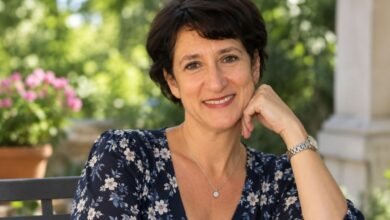
Douglas Botting was the father of two daughters, Kate and Anna. His daughter Anna Botting went on to establish a career as a journalist and television presenter with Sky News.
Anna studied geography at St Edmund Hall, the same Oxford college her father attended. In a college publication, she reflected on following in her father’s footsteps through her own participation in a scientific expedition and television broadcasting. Her account provided a personal perspective on the influence of his interests in exploration and the environment.
Botting was married to Louise Botting, the financial journalist and broadcaster who became known for presenting BBC Radio 4’s Money Box. Their marriage later ended.
The family’s connection to broadcasting is notable, but Douglas’s professional achievements should be understood independently of his daughter’s public profile. His exploration, writing and documentary work had already established a substantial career of its own.
When Did Douglas Botting Die?
Douglas Botting died on 6 February 2018, aged 83. His death was announced by Sheldrake Press, the publisher associated with his Wild Britain book and the Wild Guides series.
The publisher’s tribute emphasised his contribution to writing about wild places and the natural world. It also highlighted his belief that readers should be encouraged to visit and understand landscapes rather than experience them only through books.
That principle helps explain the significance of his later conservation-related work. His writing was not simply intended to describe a location; it sought to develop a deeper appreciation of the environments people inhabit and the need to protect them.
Frequently Asked Questions
Who was Douglas Botting?
Douglas Botting was a British explorer, author, photographer and documentary filmmaker known for his international expeditions, nature writing, biographies and historical books.
Was Douglas Botting Anna Botting’s father?
Yes. Douglas Botting was the father of Anna Botting, the Sky News journalist and presenter. His other daughter is Kate Botting.
What was Douglas Botting famous for?
He was known for exploring remote regions, writing books about travel and wildlife, making television documentaries and researching historical subjects, including the Second World War.
What was Douglas Botting’s first book?
His first book was Island of the Dragon’s Blood, published in 1958. It was based on an Oxford University scientific expedition to Socotra in 1956.
Did Douglas Botting work for the BBC?
Yes. He made documentary films for television, including work connected with the BBC’s The World About Us series, and undertook coastal exploration assignments for the BBC.
What books did Douglas Botting write?
His works included Island of the Dragon’s Blood, One Chilly Siberian Morning, Wilderness Europe, Wild Britain: A Traveller’s Guide, biographies of Gavin Maxwell and Gerald Durrell, and Nazi Gold, co-written with Ian Sayer.
When did Douglas Botting die?
He died on 6 February 2018, aged 83. His publisher and former Oxford college published tributes recognising his work as an explorer, author and documentary filmmaker.
Douglas Botting’s legacy rests on the variety of worlds he explored and the care with which he recorded them. From Socotra and the Amazon to Britain’s own wild landscapes, he brought together practical adventure, detailed research and a lasting interest in conservation. His connection to Anna Botting remains part of his story, but his own books, expeditions and films are the strongest measure of his contribution. At BritInsight, his life is best understood not simply as a family biography, but as the story of a writer who spent decades bringing distant places and remarkable people into public view.






One Comment